
Infinitely variable gear ratio transmissions are an ongoing goal of automotive engineers. The reason is simple: Most people don't like to feel the shifts.
Between 1990 and 1995, Subaru sold a small car in this country with a constant variable ratio transmission (ECVT)-the Subaru Justy. Inside this novel transmission is a hydraulically-controlled set of pulleys with a metal drive belt between them. This arrangement provides an infinite gear ratio change anywhere between 2.50:1 to 0.499:1. Driving a Subaru ECVT takes some getting used to, as the vehicle accelerates up to speed smoothly with no change in engine rpm. Unfortunately for Subaru, the ECVT Justy didn't catch on with customers-or with rebuilders.
Enter the 1996 Honda Civic HX, equipped with a CVT very similar to the Subaru. One major difference is the method of engaging and disengaging the transmission-say, during standing starts. Subaru used a powdered metal clutch, while Honda does it with a hydraulic clutch pack between the driven pulley and the differential. This clutch design is very similar to the CVT currently produced by the Van Doorne Transmission Co. in Holland.
The Van Doorne company first installed a simple CVT in a small car in the 1950s. In this early version transmission, vacuum operated the drive pulleys (figure 1). As power and speed increase, the front pulley groove narrows, so the belt forces the rear pulleys apart, against spring pressure. Depending on the position of the belt, you get an infinite gear ratio between 20:1 to 4.4:1. When the car slows down, the pulleys automatically return to the low gear position. The relationship of the pulleys and belt between lower gear to overdrive is simply based on the pulley width (figure 2). The early Van Doorne CVT also has two CVT assemblies to power each drive wheel. This splits the driving loads between two belts and works like a limited-slip differential.
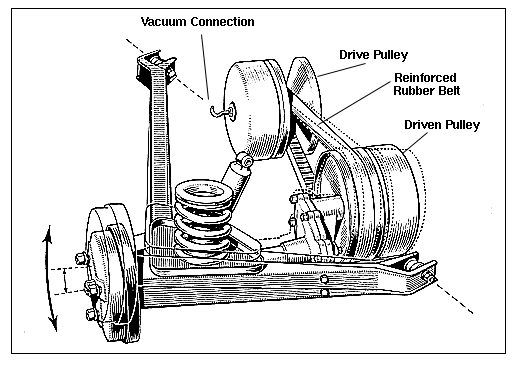 Figure 1
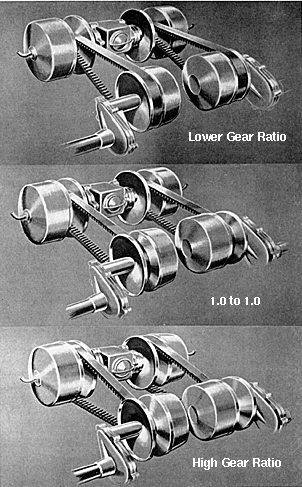 Figure 2
But did you know that the world's first application of a CVT occurred in 1896? Inventor Milton Reeves installed one in a small runabout. His simple device worked just like a modern CVT. The variable width pulleys and belt design are the same (figure 3). The Reeves CVT moves the pulleys mechanically by operating the levers with a simple chain. The only difference with today's CVT units is the method of controlling the pulley width, and the construction of the belt.
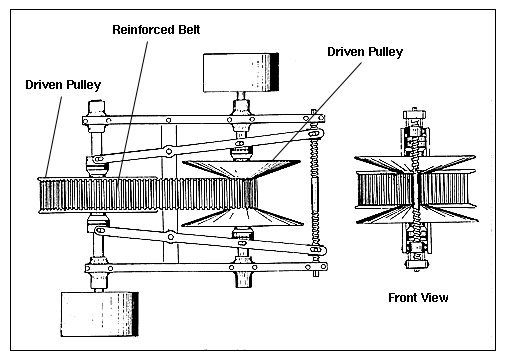 Figure 3
The weak point of the Reeves and early Van Doorne CVTs was that the belt was made mainly of rubber, and worked like a regular fan belt, pulled against a pulley, so it didn't last very long. These units were also limited to working with low horsepower engines and lightweight vehicles. So much for being ignored by Nascar and IHRA!
The rubber CVT belt finally gave way to a metal belt with over a hundred steel segments held together by spring steel bands so the belt pushes against the pulley. It lasts longer, and withstands greater loads.
Honda expects their CVT to handle a 115 horsepower Civic HX and have long life. Besides having an improved version of the multisegment steel belt (figure 4):
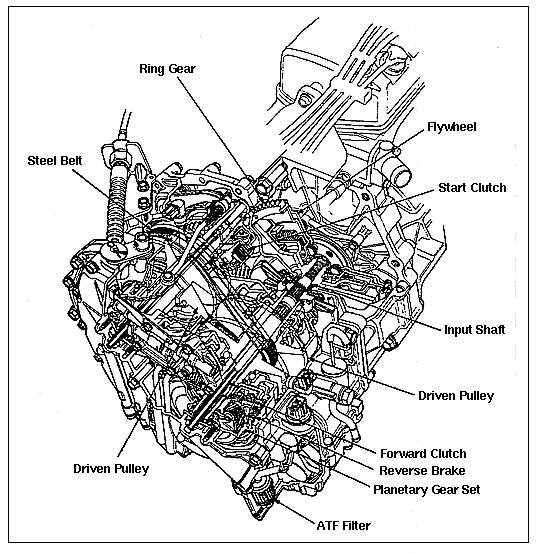 Figure 4
Honda uses a hydraulically-operated start clutch (Subaru uses a powder clutch). At rest, the belt and pulley are spinning at a low gear ratio. When the computer senses throttle opening, hydraulic pressure applies the start clutch (figure 5). The vehicle then starts to move. As long as the vehicle is moving forward, the gear ratio changes according to engine rpm and load condition.
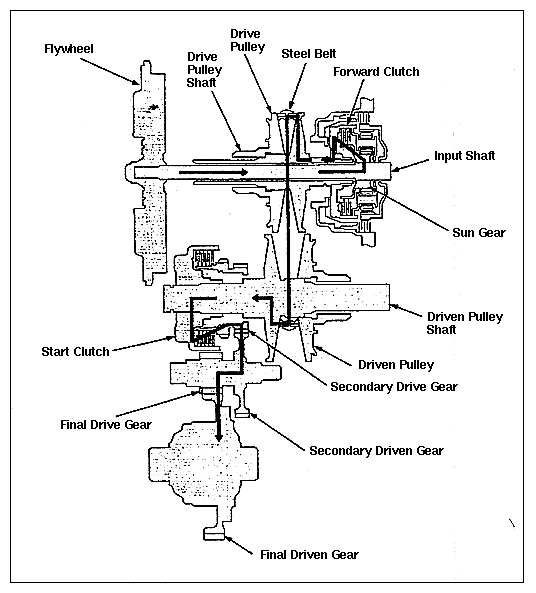 Figure 5
NOTE: In reverse, the gear ratio doesn't change (no matter what speed the vehicle is traveling).
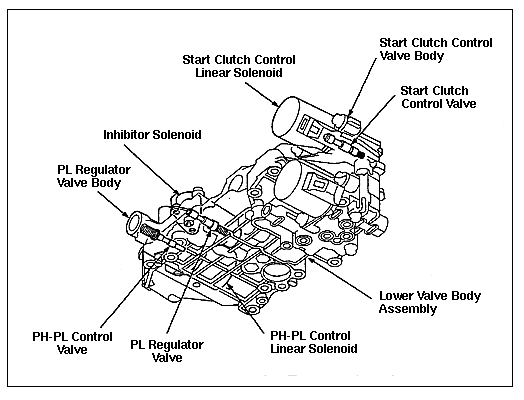 Figure 6
If you've successfully rebuilt a Subaru ECVT, the Honda CVT shouldn't make you blue. After all, Honda just borrowed something old-and added something new.
